
Allie’s Story “When I first noticed clumps of hair falling out in the shower three months after giving birth, I felt a wave of panic. My once thick ponytail had thinned to nearly half its volume, and my hairline was visibly receding. Like many new mothers, I dismissed it as “normal postpartum shedding.” But asContinue reading “Regain Strength: A Vegetarian’s Guide to Postpartum Hair Loss”
Category Archives: Uncategorized
Optimizing Nutrition in Multiple Sclerosis: Key Recommendations

Multiple sclerosis is a heterogenous disease clinically and pathologically; classification is important to set expectations, choose disease-modifying therapy (DMT), and tailor rehabilitation and lifestyle recommendations. Clinically Isolated Syndrome (CIS) — a first neurologic episode suggestive of CNS demyelination (optic neuritis, brainstem/cerebellar or spinal cord syndrome) that has not yet met criteria for MS. CIS is aContinue reading “Optimizing Nutrition in Multiple Sclerosis: Key Recommendations”
Healing Endometriosis: A Functional Medicine Approach

This post examines endometriosis through a functional medicine lens, with emphasis on nutrition, lifestyle, mind-body strategies, and integrative approaches to improve outcomes in women with this complex endocrine disorder.
Multiple Sclerosis: Types, Differences, and Nutrition Insights

MS classification — types and how they differ clinically Multiple sclerosis is a heterogenous disease clinically and pathologically; classification is important to set expectations, choose disease-modifying therapy (DMT), and tailor rehabilitation and lifestyle recommendations. • Clinically Isolated Syndrome (CIS) — a first neurologic episode suggestive of CNS demyelination (optic neuritis, brainstem/cerebellar or spinal cord syndrome) that hasContinue reading “Multiple Sclerosis: Types, Differences, and Nutrition Insights”
Navigating Infertility: Empowering Couples with Hormone Testing

Infertility is not just a medical diagnosis—it’s often an emotional journey marked by uncertainty, stress, and the need for clear, compassionate guidance. While advances in assisted reproductive technology (ART) and hormone testing have dramatically improved our understanding of fertility, navigating which tools and strategies to use can be overwhelming for couples. Hormone Testing and TrackingModernContinue reading “Navigating Infertility: Empowering Couples with Hormone Testing”
Navigating Perimenopause: Hormone Testing and Lifestyle Tips

Perimenopause and menopause mark a profound life transition, bringing hormonal shifts that affect everything from sleep to cardiovascular health. While these changes are natural, they can feel unsettling without practical tools for support. Hormone Testing in Peri/MenopauseSerum testing remains the gold standard for assessing ovarian reserve (e.g., AMH, FSH, estradiol), but urine-based methods are emergingContinue reading “Navigating Perimenopause: Hormone Testing and Lifestyle Tips”
Understanding Endocrine Disruptors: Health Risks and Solutions

What are endocrine disruptors? Endocrine‑disrupting chemicals (EDCs) are substances that can mimic, block, or interfere with natural hormones (like estrogen, testosterone, thyroid hormones, and cortisol). They may act at very low doses, and effects can depend on timing (pregnancy, puberty, menopause) and cumulative exposure (Lisco et al., 2022; Kirtana & Seetharaman, 2022). Common EDC familiesContinue reading “Understanding Endocrine Disruptors: Health Risks and Solutions”
Urine vs Blood Tests for Fertility Monitoring | Best Hormone Tests for Menopause Diagnosis
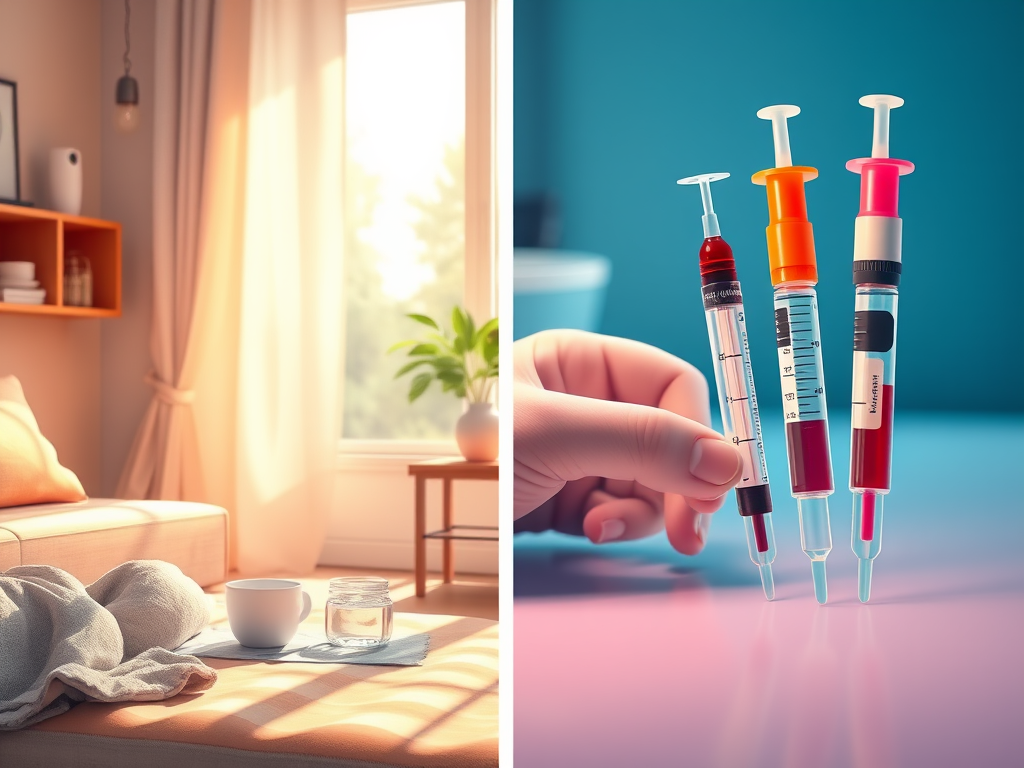
What each sample type measures (mechanism & biology) Urine hormone testing typically measures metabolites of sex steroids (for example, estrone-3-glucuronide [E3G] is a urinary estrogen metabolite; pregnanediol glucuronide [PdG] is a progesterone metabolite) or excreted intact peptides (urinary LH or hCG) after renal filtration/conjugation, so results reflect integrated secretion over hours rather than an instantaneous serum concentration. UrinaryContinue reading “Urine vs Blood Tests for Fertility Monitoring | Best Hormone Tests for Menopause Diagnosis”
 Restorative Source