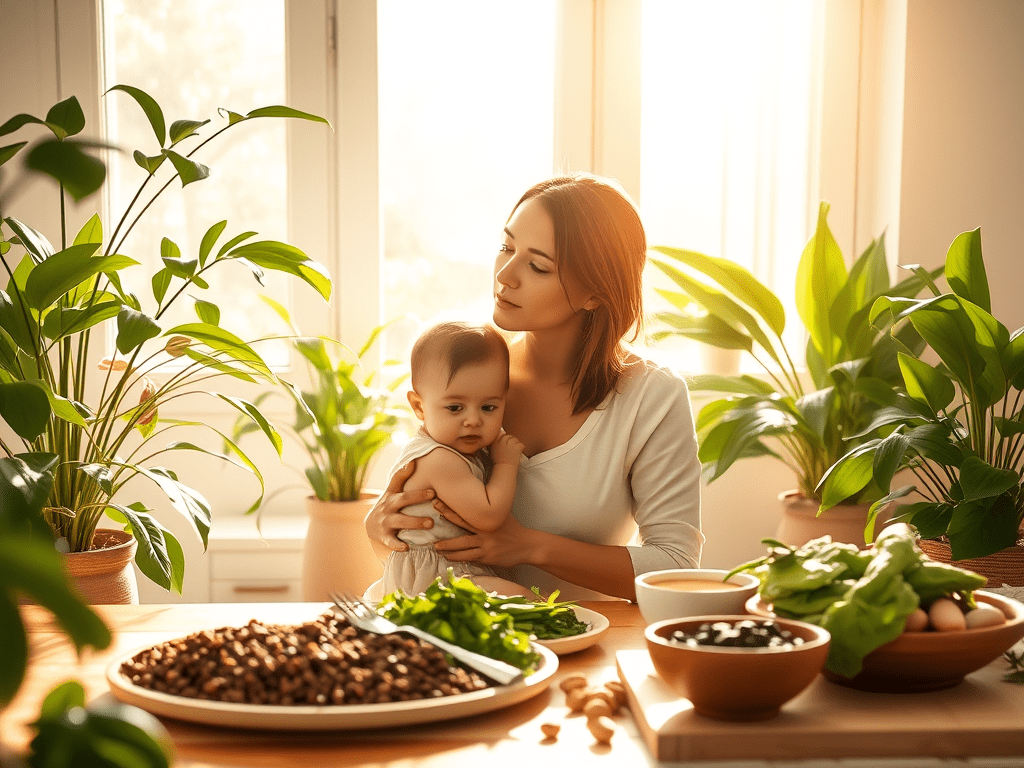
Allie’s Story
“When I first noticed clumps of hair falling out in the shower three months after giving birth, I felt a wave of panic. My once thick ponytail had thinned to nearly half its volume, and my hairline was visibly receding. Like many new mothers, I dismissed it as “normal postpartum shedding.” But as the weeks went on, the shedding didn’t stop—and I began to feel more anxious and self-conscious with every strand that slipped through my fingers.
As a vegetarian, I thought I was doing everything right—focusing on whole grains, lentils, greens, and plant-based proteins. But postpartum life has a way of humbling even the most well-intentioned eaters. Between nursing, sleepless nights, and a chaotic schedule, I often skipped meals, forgot my supplements, and survived on toast and tea. It wasn’t until I started researching why my body seemed to be in distress that I began to see my hair loss not as vanity, but as a message from within.”
The Science Behind Postpartum Hair Loss
Postpartum hair loss, or telogen effluvium, affects up to 50% of women after childbirth (Hughes, Syed, & Saleh, 2024). During pregnancy, high estrogen levels prolong the anagen (growth) phase of hair. Once hormones drop after delivery, a surge of hair enters the telogen (resting) phase, leading to shedding several months later (Hirose et al., 2023).
Recent studies suggest that postpartum anxiety, stress, and nutritional depletion can worsen this loss. Elevated cortisol levels—measurable even in fingernails—reflect ongoing physiological stress that may impede hair regrowth (Izawa et al., 2024). Women who report higher anxiety during the postpartum period also experience more severe hair loss (Hirose et al., 2024). This reinforces how interconnected our emotional and nutritional health truly are.
Moreover, hair loss can “unmask” other hidden conditions such as iron deficiency, thyroid dysfunction, or autoimmune processes (Galal et al., 2024; Samrao & Mirmirani, 2022). This is why a personalized, root-cause approach is critical—not just accepting postpartum shedding as inevitable.
The Nutrient Connection: What My Hair Was Trying to Tell Me
Hair is metabolically active tissue, and it reflects the nutrient status of the body. Common deficiencies linked with postpartum shedding include iron, zinc, selenium, vitamin D, and protein (Leavitt et al., 2025; Saini & Mysore, 2021).
As a vegetarian, I realized I wasn’t meeting my protein or iron needs during recovery. Studies show that vegetarian women may require careful planning to ensure adequate intake of high-quality plant proteins (Rolands et al., 2025; Ferrari et al., 2022). Although plant-based diets can support muscle and metabolic health when well designed (Monteyne et al., 2023; Shaw et al., 2022), postpartum demands for tissue repair, milk production, and immune recovery raise the bar even higher.
Zinc, an often-overlooked mineral, also plays a crucial role in both hair follicle cycling and mood regulation. New evidence from the Mother and Infant Nutrition Investigation (MINI) study shows that zinc and selenium levels measured from nail clippings are strongly correlated with maternal nutritional status (Fleming et al., 2024; Fleming et al., 2025). In postpartum women, zinc supplementation may help improve both anemia and depressive symptoms (Aoki et al., 2022), suggesting its value as a bridge between physical and emotional recovery.
Vitamin D deficiency has also been linked to hair thinning and poor follicle regeneration (Saini & Mysore, 2021), while omega-3 fatty acids and antioxidants from nuts, seeds, and leafy greens support scalp circulation and reduce oxidative stress.
From Deficiency to Empowerment: My Healing Transition
“Once I began addressing these deficiencies, my recovery felt almost like a slow exhale. I added a daily plant-based protein smoothie with iron-fortified oat milk, chia, and pumpkin seeds—interestingly, pumpkin seed oil has shown comparable effectiveness to topical minoxidil in promoting female hair growth (Ibrahim et al., 2021). I also started supplementing with a vegan multivitamin containing B12, iron, zinc, and vitamin D, and noticed my energy and focus improving within weeks.” – Allie
Low-level light therapy (LLLT), another non-pharmaceutical option, stimulates follicular regeneration and has demonstrated success in female hair regrowth (Pillai & Mysore, 2021). Combining this therapy with nutrient repletion and stress management offers a holistic way forward—healing from both the inside and outside.
Beyond Hair: Healing the Whole Mother
The postpartum period is not just a recovery phase; it’s a neuroendocrine transformation. Fluctuating oxytocin and stress hormones, coupled with nutrient depletion, can affect everything from mood to lactation (Walter, Abele, & Plappert, 2021; Nagel et al., 2022). Supporting the mother’s nutrition—through iron, zinc, vitamin D, and adequate plant proteins—may not only restore hair health but also buffer against postpartum depression and fatigue (Rupanagunta et al., 2023; Dowlati & Meyer, 2021).
Breastfeeding itself can deplete micronutrients like zinc and iron, but it also plays a role in emotional bonding and long-term well-being (Purkiewicz et al., 2025; Dessì et al., 2024). Thus, a compassionate nutrition plan supports both biochemical and emotional restoration.
Expanded Solutions for Postpartum Women
If you’re a new mother noticing excessive hair loss, fatigue, or mood changes, here are evidence-based strategies that may help:
- Assess and replenish micronutrients:
- Prioritize iron, zinc, vitamin D, selenium, and B12 (Cappellini et al., 2022; Elmore & Ellis, 2022; Aoki et al., 2022).
- Consider lab testing and professional guidance to personalize supplementation.
- Boost protein intake:
- Combine plant proteins (lentils, soy, quinoa, pumpkin seeds) for full amino acid coverage (Rolands et al., 2025; Antonio et al., 2024).
- Aim for 1.2–1.4 g/kg daily during postpartum recovery (Monteyne et al., 2023).
- Incorporate stress-reducing nutrients and practices:
- Include omega-3s, magnesium, and zinc, which modulate stress response and mood (Rupanagunta et al., 2023).
- Practice daily mindfulness or gentle yoga to lower cortisol (Izawa et al., 2024).
- Topical and non-pharmaceutical options:
- Try pumpkin seed oil or low-level light therapy (Ibrahim et al., 2021; Pillai & Mysore, 2021).
- Use gentle scalp massage to improve circulation.
- Community and self-compassion:
- Connect with other postpartum women. Isolation heightens anxiety and slows recovery (Hirose et al., 2024).
- Remember—your body is not failing you; it’s healing.
Closing Thoughts
“Looking back, my hair loss was not a cosmetic crisis—it was a signal. My body was asking for nourishment, rest, and care in a season when I was giving everything to someone else. Through the lens of functional nutrition, healing postpartum hair loss is about more than follicles—it’s about restoring balance, rebuilding strength, and remembering that mothers deserve nourishment too.” – Allie
If you’re walking through this season, know that there’s hope. With the right nutrients, self-compassion, and support, your hair—and your sense of vitality—can grow back stronger than ever.
References
available upon request
 Restorative Source