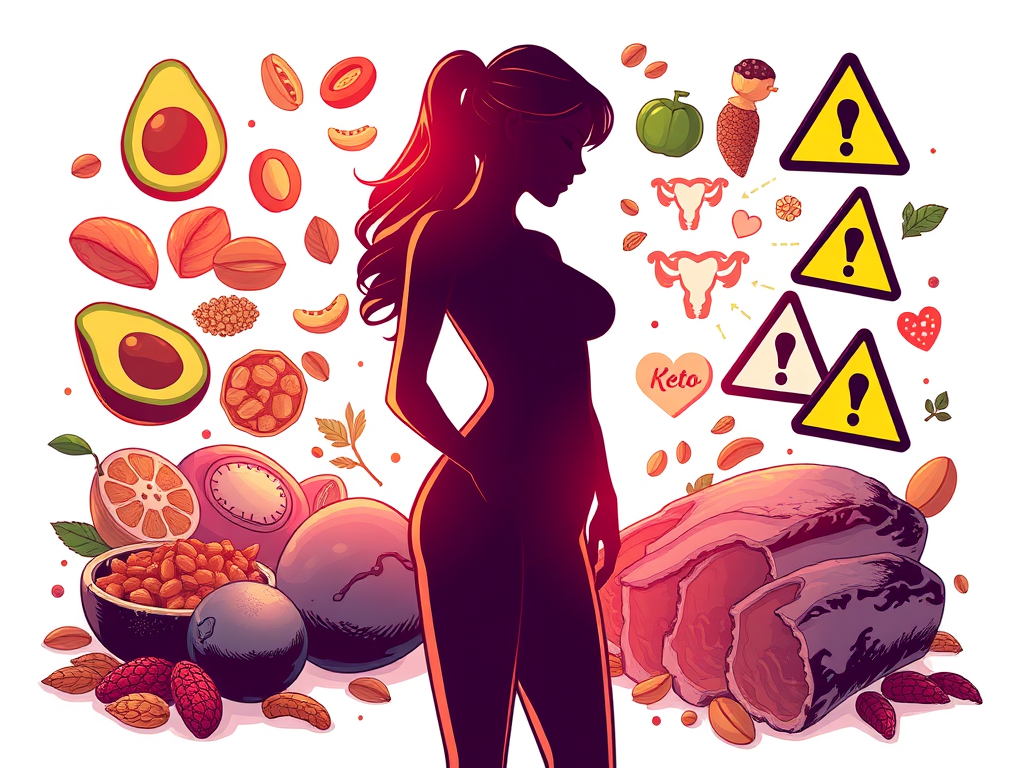
The ketogenic diet (keto) and its variations — including very-low-calorie ketogenic diets (VLCKD), targeted keto, cyclical keto, and ketogenic metabolic therapies — have grown in popularity for weight loss, metabolic control, and chronic disease management. While short-term benefits include improved insulin sensitivity, fat loss, and potential therapeutic effects for neurological and oncological conditions, mounting evidence shows that long-term adherence may pose significant health risks — especially for women’s hormonal, reproductive, and metabolic health.
Nutrient Deficiencies and Metabolic Stress
Keto diets are inherently restrictive, leading to micronutrient deficiencies in B vitamins, magnesium, selenium, calcium, and fiber (Tahreem et al., 2022). Over time, these deficiencies may contribute to oxidative stress, impaired thyroid function, and weakened immune health (Drabińska et al., 2023).
Additionally, a prolonged ketogenic state can alter cortisol and corticosterone regulation, increasing systemic stress and accelerating muscle wasting in some populations (Ferrer et al., 2023). For women, this may exacerbate adrenal dysfunction and hypothalamic amenorrhea.
Impacts on Women’s Reproductive Health
While some studies suggest that ketogenic diets may improve ovulatory function in polycystic ovary syndrome (PCOS)when used short-term (Pandurevic et al., 2023), evidence also highlights potential adverse effects:
- Menstrual irregularities: Low carbohydrate availability can disrupt hypothalamic-pituitary-ovarian (HPO) axis signaling, reducing estrogen and progesterone production (Magagnini et al., 2022).
- Reduced ovarian quality: Prolonged ketosis may impair oocyte development and reduce fertility markers in some women (Magagnini et al., 2022; Drabińska et al., 2023).
- Risks during pregnancy and lactation: Adequate carbohydrate intake is critical for fetal development. Maternal ketogenic diets during pregnancy have been associated with altered metabolic programming and lifelong health risks for offspring (Marshall et al., 2022).
Cardiovascular and Liver Health Concerns
Although some individuals experience improved lipid profiles initially, others show elevated LDL-C and total cholesterol after prolonged keto adherence (Schutz et al., 2021). High saturated fat intake, common in poorly planned ketogenic diets, compounds these risks.
For women undergoing breast cancer treatments, ketogenic diets have demonstrated mixed hepatic outcomes. While one study reported improved liver elasticity (Georgiev et al., 2023), others caution that rapid fat mobilization can stress liver metabolism, especially when combined with caloric restriction.
Cancer, Cachexia, and Hormonal Dysregulation
Emerging research suggests keto diets can support tumor suppression via ferroptosis induction but simultaneously cause relative corticosterone deficiency, worsening cachexia — a wasting condition common in cancer patients (Ferrer et al., 2023). This is particularly concerning for women with lower baseline muscle mass and higher nutritional demands.
Psychological and Neurological Considerations
While some studies highlight potential benefits for psychiatric conditions like bipolar disorder and schizophrenia(Longhitano et al., 2024; Choi et al., 2024), ketogenic diets may also lead to increased irritability, sleep disruption, and mood instability in individuals sensitive to glucose fluctuations. These effects may disproportionately impact women due to greater hormonal variability.
Key Takeaways
- Short-term keto may offer targeted benefits, but long-term adherence carries significant risks.
- Women, in particular, face heightened concerns regarding fertility, hormonal balance, bone health, and pregnancy outcomes.
- Given the restrictive nature of keto diets, nutritional monitoring and personalized intervention are essential for safety.
Want to explore evidence-based solutions, including balanced, sustainable eating approaches, that offer the metabolic benefits of keto without its long-term risks? Check out this blog post.
References
Drabińska, N., Romaszko, J., & White, P. (2023). The effect of isocaloric, energy-restrictive, ketogenic diet on metabolism, inflammation, nutrition deficiencies and oxidative stress in women with overweight and obesity (KETO-MINOX): Study protocol. PLOS ONE, 18(5), e0285283. https://doi.org/10.1371/journal.pone.0285283
Ferrer, M., Mourikis, N., Davidson, E. E., Kleeman, S. O., Zaccaria, M., Habel, J., … & Janowitz, T. (2023). Ketogenic diet promotes tumor ferroptosis but induces relative corticosterone deficiency that accelerates cachexia. Cell Metabolism, 35(7), 1147–1162.e7. https://doi.org/10.1016/j.cmet.2023.05.008
Georgiev, A., Chervenkov, L., Koleva, D., & Anastasova, V. (2023). Obesity control and liver health in breast cancer: Normalized hepatic elasticity after ketogenic diet. Heliyon, 9(10), e20449. https://doi.org/10.1016/j.heliyon.2023.e20449
Magagnini, M. C., Condorelli, R. A., Cimino, L., Cannarella, R., Aversa, A., Calogero, A. E., & La Vignera, S. (2022). Does the ketogenic diet improve the quality of ovarian function in obese women? Nutrients, 14(19), 4147. https://doi.org/10.3390/nu14194147
Marshall, N. E., Abrams, B., Barbour, L. A., Catalano, P., Christian, P., Friedman, J. E., … & Thornburg, K. L. (2022). The importance of nutrition in pregnancy and lactation: lifelong consequences. American Journal of Obstetrics and Gynecology, 226(5), 607–632. https://doi.org/10.1016/j.ajog.2021.12.035
Pandurevic, S., Mancini, I., Mitselman, D., Magagnoli, M., Teglia, R., Fazzeri, R., … & Gambineri, A. (2023). Efficacy of very low-calorie ketogenic diet with the Pronokal® method in obese women with polycystic ovary syndrome: A 16-week randomized controlled trial. Endocrine Connections, 12(7), e220536. https://doi.org/10.1530/EC-22-0536
Schutz, Y., Montani, J. P., & Dulloo, A. G. (2021). Low-carbohydrate ketogenic diets in body weight control: A recurrent plaguing issue of fad diets? Obesity Reviews, 22(Suppl 2), e13195. https://doi.org/10.1111/obr.13195
Tahreem, A., Rakha, A., Rabail, R., Nazir, A., Socol, C. T., Maerescu, C. M., & Aadil, R. M. (2022). Fad diets: Facts and fiction. Frontiers in Nutrition, 9, 960922. https://doi.org/10.3389/fnut.2022.960922
 Restorative Source
One thought on “The Risks of Long-Term Keto Diet for Women”